

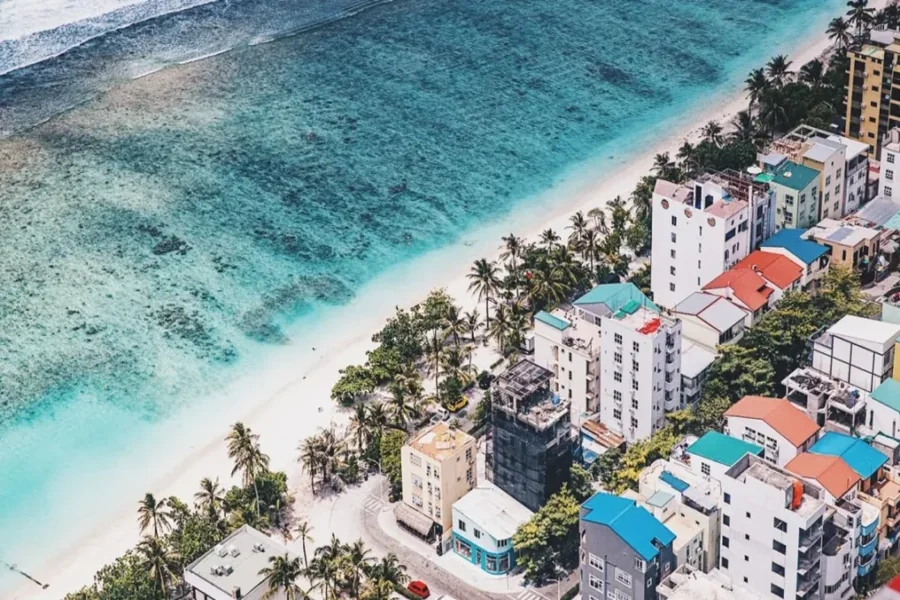
Island developments are emerging as some of the most iconic and high-stakes construction ventures across the Middle East. As coastal tourism, remote resorts, and ecological restoration projects gather pace, developers are setting their sights on ambitious marine and island sites.
But these locations bring more than scenic views—they bring logistical puzzles, climate risk, and delicate ecosystems. To deliver successfully, construction professionals must bring clarity to complexity, beginning long before the first barge leaves the shore.
1. Start with the Landform, Not the Layout
What’s happening:
Many island masterplans begin with a visual concept—but few interrogate how natural landforms will influence technical feasibility.
Why it matters:
Ignoring terrain, hydrology, or wind exposure early on often leads to costly design revisions, environmental conflicts, or delayed approvals.
What professionals can do:
- Engage landscape architects to analyse site-specific microclimates, vegetation resilience, and erosion risks.
- Use topographical modelling to guide infrastructure zones, building placements, and movement corridors.
- Frame the masterplan around ecological integration—not just land use allocation.
2. Design Must Bridge Vision and Constructability
What’s happening:
Striking designs often make headlines. But on-site, they encounter marine access issues, material constraints, and labour shortages.
Why it matters:
Ambitious architecture without practical phasing leads to stalled progress, change orders, and supply chain inefficiencies.
What professionals can do:
- Appoint lead design consultants early to test buildability across phases.
- Sequence design deliverables around marine access windows and workforce availability.
- Align structural, MEP, and transport design within a unified delivery model.
3. Plan for Off-Grid from the Outset
What’s happening:
Many island sites lack municipal power, water, or waste connections—but this is often treated as a secondary design concern.
Why it matters:
Retrofitting solar, desalination, or composting systems is far more costly than embedding them from the beginning.
What professionals can do:
- Design independent utility clusters powered by renewables.
- Integrate passive cooling, greywater reuse, and waste-to-energy strategies into architectural concepts.
- Factor maintenance access and operational support into core infrastructure design.
4. Logistics Will Make or Break the Timeline
What’s happening:
Construction schedules often underestimate the challenge of delivering materials, equipment, and personnel to remote island sites.
Why it matters:
Delays in barge routes, staging areas, or accommodation logistics can derail even the most technically sound plan.
What professionals can do:
- Collaborate with project managers and marine transport experts to develop detailed staging strategies.
- Identify material consolidation points and modular build opportunities onshore.
- Plan sequencing to maximise efficiency within tight marine transport windows.
5. Isolation Isn’t a Problem—If You Plan for It
What’s happening:
Isolation is often viewed as a constraint. But when approached strategically, it becomes a design advantage.
Why it matters:
Well-integrated, off-grid developments can demonstrate cutting-edge sustainability, energy independence, and guest experience.
What professionals can do:
- Use remote access as a design opportunity: fewer roads, more walkability, natural topography as orientation.
- Work with engineering support teams to simplify systems without compromising reliability.
- Document environmental metrics to support approvals and long-term ESG goals.
Final Thought
Island construction isn’t about building differently—it’s about building deliberately. It demands clarity from day one: about terrain, phasing, logistics, and lifecycle needs. For planners, designers, and engineers, it’s an invitation to apply precision where assumptions don’t hold.
Because when isolation is planned for, not worked around, it becomes the project’s greatest asset.
