

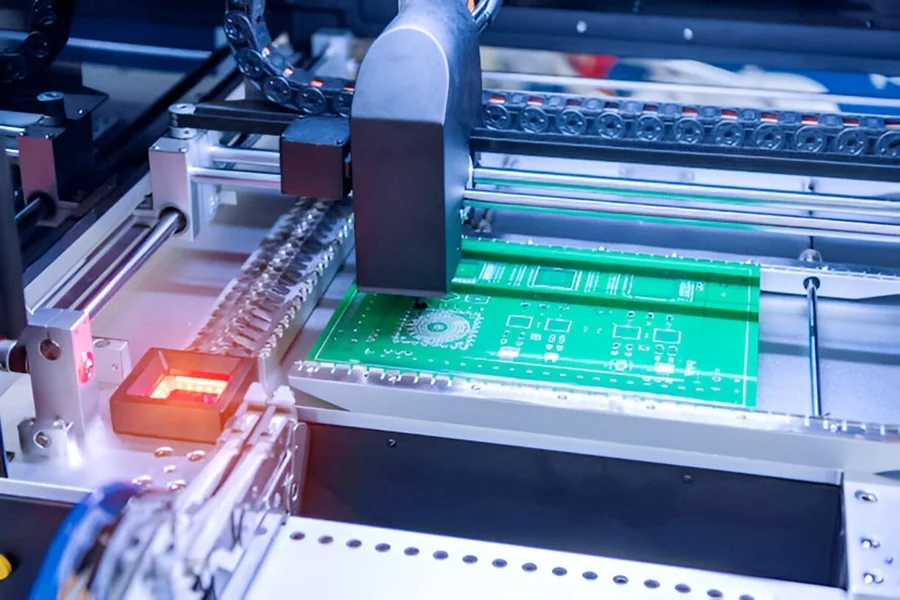
In the fast-evolving electronics industry, a PCB Prototype plays a crucial role in transforming innovative circuit ideas into functional products. Before mass production begins, prototyping helps engineers verify designs, detect flaws, and optimize performance. Whether you’re developing a new consumer gadget, an industrial control system, or a medical device, a well-made PCB Prototype serves as the first tangible step toward ensuring product reliability and manufacturability.
Importance of PCB Prototype in Product Development
A PCB Prototype allows designers and manufacturers to validate their circuit layout, component placement, and signal integrity before moving to full-scale production. This stage is essential because even minor errors in the design can lead to significant issues during mass production, resulting in wasted time, increased costs, and potential product recalls.
Prototyping provides the opportunity to test how the circuit behaves under real-world operating conditions. This includes evaluating power distribution, checking thermal performance, assessing electromagnetic interference, and verifying that the board meets all design and regulatory requirements. Early identification of design flaws enables quick adjustments, helping to avoid expensive redesigns later in the production cycle.
Types of PCB Prototype
Depending on the complexity and purpose, PCB Prototype boards can be created in several forms. Single-sided prototypes are commonly used for basic circuits or educational projects, where only one conductive layer is needed. Double-sided prototypes support more complex routing, allowing designers to place components on both sides of the board and interconnect them through plated through-holes.
For more advanced applications, multilayer prototypes are utilized. These boards feature multiple stacked layers, enabling high-density interconnections, controlled impedance routing, and improved signal integrity. They are particularly suitable for high-speed electronics, telecommunications, and compact devices where space is limited but functionality requirements are high.
Rigid, flexible, and rigid-flex prototypes are also widely used. Flexible PCB Prototypes are especially useful in applications that demand bendable or curved designs, such as wearable devices, foldable gadgets, and medical instruments. Rigid-flex prototypes combine the benefits of rigid and flexible PCBs, providing mechanical stability along with design flexibility.
Materials and Processes Used in PCB Prototype Manufacturing
The performance of a PCB Prototype depends significantly on the materials and fabrication techniques used. Standard FR-4 laminates are commonly chosen for general-purpose applications due to their cost-effectiveness and versatility. However, for high-frequency or specialized designs, advanced materials such as Rogers, ceramic, or PTFE-based substrates may be used to achieve better dielectric performance and thermal stability.
During the manufacturing process, precision etching, drilling, and plating techniques are employed to ensure accurate trace geometry and reliable interconnections. Depending on the design complexity, laser drilling may be used for microvias, while controlled impedance techniques are applied for high-speed circuits. Surface finishes like HASL, ENIG, or immersion silver are selected based on performance needs, solderability, and shelf life.
Applications of PCB Prototype Across Industries
A PCB Prototype is indispensable across virtually every industry that relies on electronic circuits. In consumer electronics, prototypes are used to test the functionality of smartphones, smart home devices, and wearable technology. In the automotive industry, prototypes help validate the performance of electronic control units, sensors, and communication systems.
Medical device manufacturers use prototypes to ensure their equipment meets strict regulatory and reliability standards. Aerospace and defense applications depend on prototypes for high-reliability systems such as radar modules, navigation equipment, and communication networks. Industrial sectors utilize prototypes to verify control systems, automation modules, and power electronics before large-scale deployment.
Benefits of Creating a High-Quality PCB Prototype
Developing a reliable PCB Prototype offers numerous advantages. It reduces design risks by allowing engineers to identify and resolve errors early. It accelerates time to market by enabling faster design iterations and ensuring smoother transitions into mass production. It also improves product quality by validating design performance, minimizing potential defects, and ensuring compliance with safety and industry standards.
Moreover, prototyping supports design innovation. Engineers can experiment with new layouts, materials, and components without committing to large production volumes. This flexibility encourages creativity and helps bring novel products to market faster and more cost-effectively.
Choosing the Right Supplier
Partnering with the right PCB Prototype supplier is critical to achieving accurate, reliable, and timely prototypes. A trusted supplier provides advanced fabrication technologies, quick turnaround times, and technical support to ensure your designs are manufactured to exact specifications. By collaborating with an experienced supplier, businesses can reduce development cycles, lower risks, and bring high-quality electronic products to market efficiently.
