

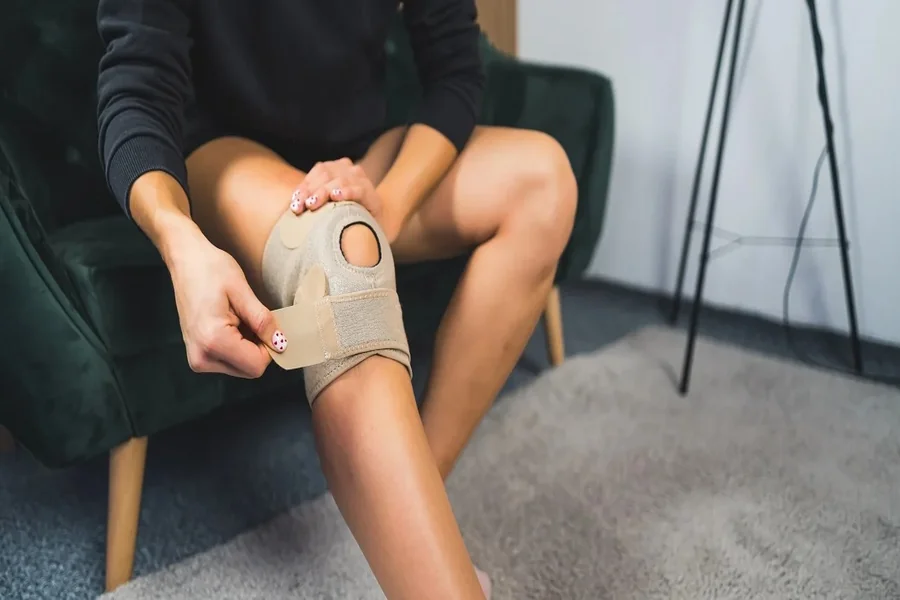
If you have ever felt that sickening “pop” followed by the immediate realization that your knee is no longer a part of your team, you know the physical and mental toll of a ligament injury. Whether it’s the ACL, MCL, or a meniscus tear, the aftermath is a frustrating mix of ice packs, elevation, and the nagging question: “When can I trust my leg again?”
You’ll hear a lot of terms thrown around such as knee wraps, knee supports, and knee caps. But when you’re dealing with structural damage like a ligament tear, the stakes are higher than a simple case of runner’s knee. You aren’t just looking for warmth or light compression; you’re looking for stability. This is where the hinged knee cap enters the conversation.
But is it right for you? Or is it just a bulky piece of plastic and neoprene that will end up at the bottom of your closet?
Let’s break down the “who, why, and when” of hinged supports with a bit of honesty and a lot of practical advice.
Understanding the Hierarchy of Support
Let’s clear up the confusion between the three main players in knee protection.
- Knee Wraps: Usually long strips of elastic fabric, they are great for powerlifters needing extra rebound or for someone with mild swelling. They offer high compression but zero structural stability.
- Knee Caps (Sleeves): These are the pull-on, elasticated supports you see at the gym. They provide proprioception which is just the fancy word for reminding your brain that your knee exists. They’re great for warmth and minor aches, but they won’t stop a ligament from giving way.
- Hinged Knee Supports: These are the heavy hitters. They feature rigid or semi-rigid stays (the hinges) on either side of the joint. They are designed to mimic the natural movement of the knee while preventing the side-to-side or wobbling motions that cause re-injury.
Who Should Actually Wear a Hinged Knee Cap?
Not everyone with a sore knee needs a hinge. In fact, over-bracing can sometimes lead to muscle laziness. However, for specific groups of people, a hinged support is a non-negotiable part of the healing journey.
1. The Post-Op Individual
If you’ve recently had surgery to repair an ACL or PCL, your surgeon likely sent you home in a massive, rigid brace. It provides a safety net as you transition back to walking without crutches, ensuring that if you take a wrong step or trip, the hinge absorbs the lateral force instead of your newly repaired ligament.
2. The Grade II Sprain Survivor
Ligament injuries are graded from I to III. A Grade II sprain means a partial tear. In this scenario, your ligament is stretched and weakened. Every time you pivot or turn, you risk turning that partial tear into a full one. A hinged brace acts as an external ligament, reinforcing the joint’s stability while the internal tissue knits back together.
3. The Lateral Instability Crowd
If your injury involves the MCL (inside of the knee) or LCL (outside), your primary issue is the opening up of the joint. If you try to walk on a damaged MCL without support, the knee can buckle inward. The hinges on a professional-grade knee cap are specifically designed to block this side-to-side movement while still allowing you to bend and straighten your leg.
4. The Returning Athlete
The psychological trauma of a ligament injury is real. Even when the doctor says you’re cleared, the first time you try to cut on a soccer field or jump for a rebound, your brain might scream no. For many athletes, a hinged knee cap provides the physical and mental confidence needed to return to sport. It acts as a mechanical reminder to keep the knee aligned.
The Benefits of Using a Knee Wrap
Why choose a hinged model over a standard sleeve? It comes down to mechanical protection.
- Weight Distribution: A hinged brace helps offload weight from the damaged side of the joint. If you have a medial (inner) tear, certain braces can be adjusted to shift pressure to the lateral (outer) side.
- Hyperextension Prevention: Many hinged supports have stops that prevent the knee from straightening too far. For PCL or ACL injuries, preventing hyperextension is vital to keep the graft or tear from being overstretched.
- Controlled Range of Motion: Some advanced hinged caps allow you to lock the hinge at certain angles (e.g., you can bend it to 90 degrees but not 0). This is essential in early-stage rehab.
How to Choose the Right One
If you fall into the categories above, don’t just grab the cheapest one off the shelf. Look for these three features:
| Feature | Why it Matters |
| Offset Hinges | These follow the natural “rolling” motion of the knee rather than a simple pivot point. |
| Breathable Neoprene | You’re going to get sweaty. Look for perforated materials to prevent skin irritation. |
| Adjustable Strapping | A brace that slides down your leg is useless. Look for “X-straps” that anchor the brace above and below the calf. |
Caring for Your Braces
A hinged knee cap is an investment, both for your wallet and your recovery. To make sure it stays effective (and doesn’t start smelling like a locker room), keep these three rules in mind:
- The Sleeve Trick: If the neoprene causes a rash or brace bite behind your knee, wear a thin, cotton compression sleeve or even a long sock underneath the brace. This acts as a moisture-wicking barrier.
- Check the Hinges: Most professional braces have removable hinges. Take them out once a week to wipe down the metal or plastic parts. Dirt and salt from sweat can grit up the mechanism, making the smooth motion feel jerky.
- Hand Wash Only: Never toss a hinged brace in the dryer. The high heat will break down the elastic and the medical-grade Velcro. Hand wash with mild soap, rinse thoroughly, and let it air dry away from direct sunlight.
The Verdict
If you are dealing with a minor ache or just want some warmth during a winter run, stick to a knee sleeve or a simple wrap. You don’t need the bulk or the cost of a hinged unit.
However, if you have diagnosed ligament damage, feel a giving way sensation when you walk, or are recovering from surgery, the hinged knee cap is your best friend. It is the bridge between being injured and being active. It respects the biology of your knee by allowing the movement you need while forbidding the movement that hurts you.
Recovery isn’t a straight line. A good support system, both the physical brace and a solid PT plan, is what gets you across the finish line
