

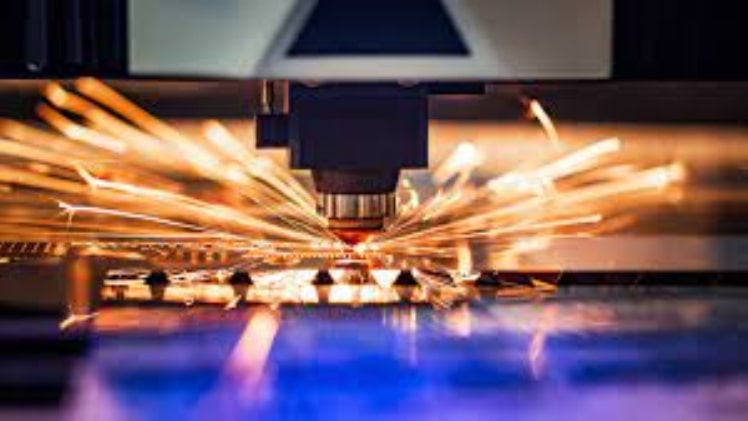
Laser cutting has been a beneficial advancement to emerge from the past 50 years. Extending outrageous hotness in an unbelievably tight stream and laser slicing permits makers and welders to cut custom pieces and parts out of metal with the highest level of accuracy. Like such countless different advances, it’s a supporter of the expanded smoothness and unwavering quality of numerous cutting-edge machine parts.
Likewise, metal laser cutter is a steadily creating field with all advances, which implies it’s rarely astonishing. There are consistently impediments to push past and cutoff points to survive. Regarding laser cutting thick steel, those cutoff points manifest principally in factors like the materials ready to be cut, the force of the lasers, and – because of those things – the most extreme thickness of metal that the lasers can deal with.
What Metals Can a Laser Cut?
Lasers can slice through numerous materials and are regularly utilized on a limited handful sort of metal – precisely, carbon steel, mild steel, treated steel, steel amalgams, and aluminum.
Carbon steel: Steel is a combination of iron and carbon. Carbon steel will be steel with an exceptionally high measure of carbon.
Mild steel: Mild steel has a low convergence of carbon contrasted with carbon steel.
Hardened steel: Stainless steel adds modest quantities of chromium to protect consumption.
Other steel composites: Alloyed steel is reinforced with one different component to fortify it.
Aluminum: Aluminum materials are valuable due to being lighter than steel ones.
Notwithstanding these metals, lasers can be utilized to slice through numerous non-metallic materials, from wood to plastic to earthenware production. Notwithstanding, it most frequently becomes acclimated to cut metal, explicitly recorded previously.
What Is the Maximum Thickness a Laser Can Cut?
It appears to be sufficiently straightforward to request a solitary most excellent cutoff on thickness for all laser cutters, yet it’s more confounded than that. Numerous factors affect everything in how a laser slices through a piece of metal, so the most significant laser cutting thickness relies upon the particular laser and material being utilized and other things.
We can match a high wattage laser – 6,000 watts – with metal-like tempered steel for naming a particular number. For this situation, the laser cutting’s most extreme thickness would commonly be around 2.75 inches.
In any case, that thickness is dependent upon those specific factors. A similar laser combined with carbon steel could most likely handle up to 1 5/8 inches, while a 4,000-watt laser could infiltrate 1 inch of treated steel.
The most significant thickness would go up monstrously for non-metallic materials like wood and plastic, as they’re significantly less thick and solid than steel or aluminum.
Martial Strength
The strength of a given metal can shift contingent upon factors like the proportion of various components in the composite. Yet, there are still inclinations for particular sorts of metal to be more grounded or more vulnerable than others. Here is a short outline of how the recently referenced materials stack facing one another, from the most complex to least demanding to cut.
Carbon steel: High carbon measures give an additional layer of solidarity to a metal.
Mild steel: mild steel is more straightforward to cut. Nonetheless, however more cuttable, completed items made of mild steel are more grounded and more robust than those with higher carbon measures.
Hardened steel: The presence of chromium battles rust and frequently makes the material less pliable and harder to cut. However, it doesn’t have a similar impact as carbon.
Aluminum: Aluminum is commonly an exceptionally flexible material, as anybody encountered with aluminum foil knows. It seldom demonstrates a massive issue for lasers.
Non-metallic materials: Unsurprisingly, at the lower part of the rundown are materials like wood, plastic, and fired, which have substantially less strength than metal.
